Nine Thresholds Against the Dark: A Cosy-Creepy Guide to Britain’s Ghost-Warding Christmas Customs
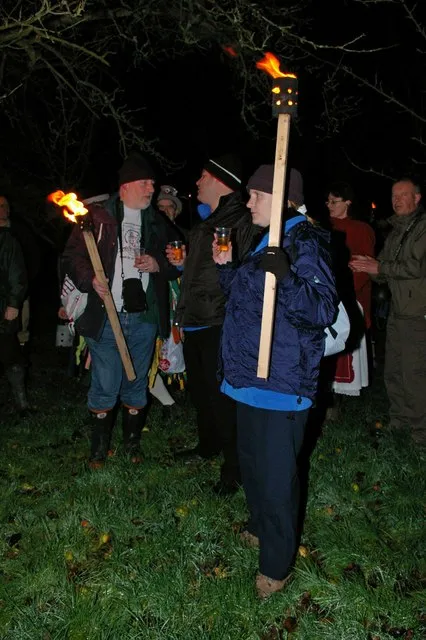
Photo: Glyn Baker, CC BY-SA 2.0, via Wikimedia Commons
A Season of Lights and Locked Doors
December in Britain is a season of lights, but the older calendar was less concerned with comfort than with keeping something out. The following nine customs are often described as ghost-warding rituals. Some have genuine roots in pre-Reformation or pre-Christian practice; others acquired their eerie gloss in the Victorian and Edwardian imagination. This guide for December 2026 treats them as a cosy-creepy itinerary, not a set of proven doctrines.
1. Wassailing the Apple Trees
On Twelfth Night Eve, or thereabouts, communities in Kent, Sussex, Somerset and the cider counties of the West Country have long gathered among orchards to sing, make noise and place cider-soaked toast in the branches. The purpose was usually framed as waking the trees and encouraging a good crop. The noise may also have been understood to drive off malign influence, though the evidence points more strongly to fertility and community than to systematic ghost-warding. The Victorian revival gave the custom much of its picturesque gloss.
2. Mumming and Guising
Mumming plays, in which disguised performers visit houses and perform a ritual combat, are recorded across England from the medieval period onward. In Scotland and parts of northern England, guising at Hogmanay involved costumes and house visits. Masks and disguises have often been interpreted as a way of confusing malevolent spirits, but the safer historical reading is that they grew from church drama, folk play and the licence of the festive season. The ghost-warding explanation is attractive, and thin.
3. Holly and Ivy
Bringing evergreens indoors in midwinter is an old European practice, and holly in particular acquired a reputation for repelling harm. Its prickles and red berries made it a natural symbol of protection, while ivy suggested fidelity and endurance. Christian allegory later absorbed both plants into carols and church decoration. The idea that holly was brought inside as a shelter for spirits is a later embellishment; the more likely history is practical decoration, Christian symbolism and a general sense that greenery belongs in the dark months.
4. The Yule Log
A great log kept burning through Christmas, with charred remains saved to protect the house from fire or lightning, is a genuine custom in parts of Britain and northern Europe. Its roots are usually traced to pre-Christian winter fires, though the evidence for a specific ghost-warding function is weak. What survives is the ritual of the hearth: the house gathered around a controlled blaze while the year turned. The Victorians made it sentimental. The older instinct was more practical and more anxious.
5. Candles in the Window
A candle placed in a window on Christmas Eve has been explained as a guide for Mary and Joseph, a welcome for Christ, or a simple light against the dark. In some regions, blessed candles were kept for protection. The ghost-warding reading is ancient in general terms, since light has long been set against malign influence, but the Christmas window candle is more often Christian and domestic than occult. The Christingle, with its orange and candle, is a Moravian invention of the eighteenth century and a reminder that festive light can be both devotional and theatrical.
6. First-Footing and the Threshold
Strictly speaking, first-footing belongs to New Year rather than Christmas, but it sits inside the same festive season and shares its concern with the door. In Scotland and northern England, a dark-haired man arriving with coal, bread, salt or whisky was thought to bring luck. The threshold is the most liminal part of any house, and the ritual is a way of managing what enters. The ghost-warding interpretation is speculative, but the anxiety is real: the door is where the outside becomes the inside.
7. The Mari Lwyd
The Mari Lwyd is a Welsh custom in which a horse skull on a pole, decorated with ribbons and accompanied by singers, challenges households in verse at the door. It is recorded from the nineteenth century and its origins are obscure. It is not exactly a ghost-warding rite, but it is a threshold ritual of the first order: a strange animal presence arrives, a contest takes place, and the house must decide whether to admit it. The custom’s power lies in that pause at the door.
8. The Hooden Horse
Kentish hoodening involved a wooden horse’s head carried by a performer who visited houses in December. It has been claimed as a pre-Christian survival, and it may preserve older animal-disguise traditions, but the evidence is fragmentary and much of what survives was revived or reshaped in the modern period. The ghost-warding angle is tempting: an animal mask at the threshold, a noisy company, a house made safe by performance. It is also exactly the kind of claim that Victorian folklorists liked to make.
9. The Christmas Ghost Story
Telling ghost stories at Christmas is a genuine Victorian custom, fuelled by periodicals, Dickens and the later example of M. R. James, who wrote many of his tales to be read aloud to friends at Cambridge in winter. It is not a ghost-warding ritual in any historical sense. It is something subtler: a controlled encounter with fear at the darkest point of the year. The idea that it descends from ancient pagan practice is a Victorian embellishment, but the custom itself has proved remarkably durable.
The Common Thread
If these nine customs share anything, it is the threshold: the orchard, the door, the hearth, the window, the edge of the year. They are less about banishing ghosts than about managing the dark. Some are Christian, some are agricultural, some are simply excuses for noise and company in a cold month. All of them become eerier when we stop treating them as quaint survivals and remember that they were once ways of making the house feel safe. In December 2026, a candle in the window and a story by the fire still do the same work.
