No Ghost Required: Six Ordinary British Places That Decline to Be Haunted
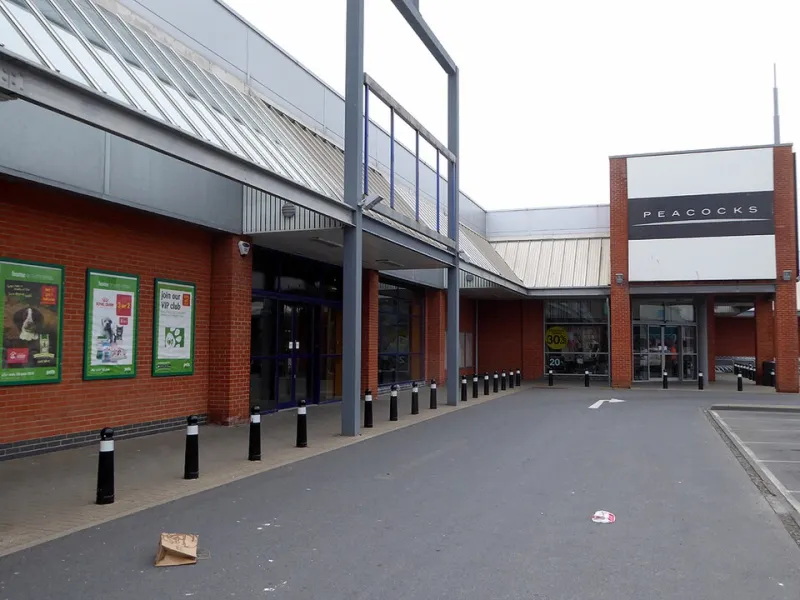
Photo: John Lucas , CC BY-SA 2.0, via Wikimedia Commons
Every county in Britain can offer a haunted pub, a grey lady and a stretch of lane where a coach-and-four is said to have overturned. This guide is not concerned with any of them.
It is concerned instead with places that have no legend whatsoever. Locations so thoroughly ordinary, so plainly designed for the passing through of human beings, that no story has ever attached to them — and which, for precisely that reason, produce a certain low-grade unease in anyone standing still long enough to notice. A place that refuses to be haunted can be more unsettling than one that tries.
What follows is a field guide. No equipment is required beyond a coat and a willingness to look faintly suspicious.
1. The retail park, after six
There is a particular hour at which a retail park passes out of commerce and into atmosphere. The units are still lit; the shutters are half down; the car park has emptied except for three vehicles belonging to staff, and the trolley bay is full of trolleys that nobody will return. The chain DIY store's yellow signage hums. Nothing has happened here, ever, and yet the aspect is that of a stage set abandoned mid-scene.
Eerie retail spaces work on the principle of the empty container. Everything present is a template for an activity — a place to park, a place to queue, a place to load — and none of the activity is occurring. What remains is an outline of human behaviour, drawn in kerbstones.
What to notice: the specific noise of a refrigeration unit at the rear of a supermarket; the way the painted arrows underfoot lead nowhere in particular; the one car whose owner is visible, sitting quite still, with the interior light on.
2. The reservoir path in February
Not the drowned village. The drowned village is far too picturesque and has been written about quite enough. Consider instead the engineered embankment on the ordinary side of the water: the concrete overflow, the rusted handrail, the brown demarcation of the waterline high above your head, showing plainly that the landscape has been privately agreed upon and may be revoked.
Reservoir paths are places where nature has been subcontracted. Everything is managed — the trees planted in ranks, the gravel renewed, the signage forbidding swimming in a tone of weary municipal certainty. The absence here is not of people but of the wild.
What to notice: the watermark on the stone; the sound of a sluice you cannot locate; the moment the wind drops and the water makes no noise at all.
3. The bus interchange, stand C
The bus station is Britain's most underrated uncanny interior. It is lit with the flat, colourless light designed to discourage loitering, which has the incidental effect of making everyone present resemble a photograph of themselves. Departure boards click and revise. Somebody's suitcase has been left, upright and purposeful, beside a bench, as though its owner has stepped briefly out of the world.
The horror of the interchange is procedural. It runs on timetables, and timetables have a way of stranding people in the interval between one service and the next. You are not waiting for a bus. You are waiting inside a published schedule.
What to notice: the stand that is out of use and has been for some while; the laminated notice taped over another notice; the tannoy announcement so distorted that only the word sorry survives.
4. The service station at three in the morning
No location in Britain is more reliably strange. The building is warm, open and staffed, and yet nobody is there for any purpose other than to be somewhere else. The coffee machine is the loudest object. There is a smell of hot laminate and cleaning fluid. A single lorry driver sits with his back to the room, doing paperwork.
What makes the service station eerie is its total hospitality and its total indifference. It will serve you at any hour. It will remember nothing.
What to notice: the shelf of local produce that is not local; the map on the wall showing a county boundary in a decorative font; the way the automatic doors open for nobody.
5. The municipal garden with the drained fountain
Every town has one: a rectangle of municipal planting, a few benches, a war memorial, a fountain switched off since a previous administration. The bedding plants are changed twice a year in obedience to a rota. There is a litter bin of a design that was clearly once modern.
This is a place whose entire eeriness lies in maintenance. Somebody is still mowing it. Somebody still orders the bulbs. The institution that made this garden has outlived its own confidence and continues on habit alone, and the effect — as anyone who has sat there on a Sunday evening will confirm — is of a room kept ready for a guest who is not coming.
What to notice: the plaque that names the donor; the fountain basin, dry, with a coin still in it; the exact moment the streetlights come on and the garden becomes a different place.
6. The ring road footbridge
Last, and finest, the pedestrian bridge over a dual carriageway. Painted a municipal green. Mesh panels on both sides. From the centre you can watch four lanes of traffic pass beneath you at speed, all of it sealed, all of it ignoring you entirely.
The ring road is the modern equivalent of the parish boundary: it divides the world into those inside and those outside, and it does so with total indifference. Standing on the bridge, you are briefly in neither place.
What to notice: the hum of the road felt through the handrail; the airborne litter caught in the mesh; the way the traffic sounds like weather.
Why nothing haunts these places
A haunting requires a grievance — a wrong done, a promise broken, a name that somebody ought to remember. These six locations have no grievances. They are not old enough to have been betrayed and not loved enough to have been mourned. That is their peculiar quality. They are landscapes of pure function, and function, once interrupted, looks exactly like absence.
There is also the matter of evidence. Britain's supernatural folklore is unusually fond of documentation — the rectory, the manor, the recorded family. Places that generate no records generate no ghosts. What they generate instead is a mild, persistent impression that the world has been administratively arranged and that the arrangement is not quite finished.
A note for readers and writers
If you intend to use these places, resist the temptation to install a spectre. The whole point is the vacancy. A story set on a ring road footbridge is not improved by a phantom hitchhiker; it is diminished. Better to keep the prose level, the details specific and the wrongness unclaimed — a light left on in a shut unit, a bench that has been recently repainted, a tannoy that says sorry and nothing else.
And if you go to look for yourself, go on a weekday evening in the rain, when the ordinary places are at their plainest. Take nothing. Leave nothing. Do not expect to be frightened. Expect instead to stand for slightly longer than you meant to, watching the automatic doors open for nobody, and to find that you cannot immediately say why.