The Notification Is the Poltergeist: How Smart Homes Have Crowded the British Ghost Story
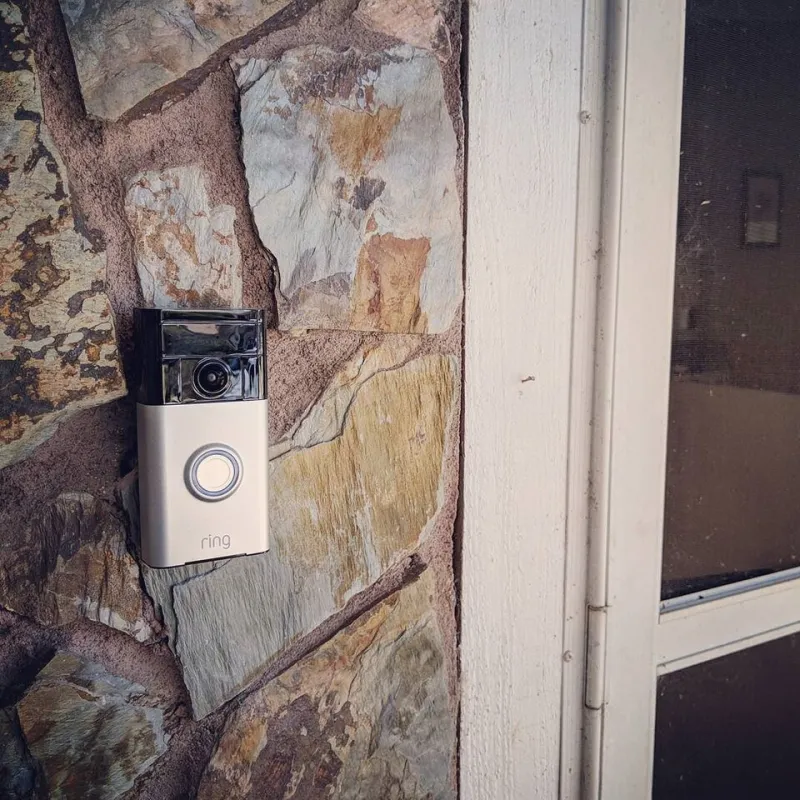
Photo: Robert Nelson from Tarpon Springs, Florida, USA, CC BY 2.0, via Wikimedia Commons
The British ghost story has usually been a story of restraint. A cold patch on a staircase. A dog that will not pass the door. A face at a window that is not there when the lamp is lit. The form depends on an economy of evidence: one witness, one house, one unexplained detail allowed to stand without proof. In the Victorian terrace or the converted mill, the haunting is powerful because it is barely there.
That economy has been disrupted. In 2026, the British home is increasingly a monitored space. Doorbell cameras watch the front path; baby monitors watch the landing; dashcams watch the street; smart speakers listen from the kitchen worktop. The ghost story has not disappeared. It has become crowded.
The Old Haunting Was a Matter of Restraint
The classic British haunting works by withholding. The reader is given a sound, a smell, a displacement of objects, and is asked to supply the rest. The terror lies in the gap between event and explanation. This is the lesson of the Horla: the unseen presence is frightening because it cannot be brought into focus, only inferred. The same principle governs the country-house ghost and the suburban poltergeist. A single witness is enough, and a single witness is all there is.
Domestic surveillance changes the arithmetic. A doorbell camera does not merely watch; it retains. A baby monitor does not merely listen; it transmits. A smart speaker does not merely wait; it answers. Each device adds a witness, and each witness adds a record. The haunted house has acquired a small, automated bureaucracy of observation.
A House That Keeps a Record
Consider the ordinary grammar of the modern British haunting. The phone buzzes at 2.13 a.m. The doorbell has detected motion. The clip is eleven seconds long: an empty path, a hedge, a wheelie bin, and then a shape at the edge of the frame that the compression has made ambiguous. The footage is stored in the cloud. It can be replayed, paused, shared, enlarged. The ghost has been given a timestamp.
Or consider the baby monitor. A parent hears a voice through the speaker, a soft phrase in an empty room. The device is checked. The room is empty. The recording is reviewed. There is nothing on the recording, or there is something that might be static, or breath, or the house settling. The eerie has moved from the nursery to the app.
The smart speaker is perhaps the most British of these developments, because it introduces a note of domestic politeness. A device in the front room answers a question that no one has asked. It confirms a timer that was never set. It speaks in the accents of a helpful assistant. In a new-build flat, where the walls are thin and the neighbours are close, the effect is not Gothic grandeur but a kind of administrative uncanny: the house is not haunted, it is simply responding to inputs that cannot be traced.
The Crowded Eerie
The argument that surveillance disenchants the world is too simple. Cameras do not necessarily make a place less eerie; they make it differently eerie. The old ghost story asked: did I see that? The new one asks: what does the clip show? The old haunting was a private experience. The new haunting is a shared file, a group chat, a local Facebook group with a blurred image and a request for information.
This is a crowding in two senses. First, there are more observers. A single anomaly can now be caught from several angles: the doorbell, the dashcam opposite, the phone in the bedroom, the security light next door. Second, there are more explanations. Every frame can be analysed for pets, foxes, condensation, insects on the lens, infrared reflection, a neighbour in a dressing gown. The ghost is surrounded by evidence, and evidence is a kind of company.
The result is not a less haunted Britain but a more cluttered one. The Victorian terrace and the new-build flat alike become places where the horror is a notification. The ghost does not need to appear; it needs to be detected. And detection is now cheap, continuous and cloud-based.
The New Rules of Evidence
The British ghost story has always been interested in proof, but proof has changed. The Society for Psychical Research collected testimony; the modern household collects footage. The old evidence was anecdotal and therefore arguable. The new evidence is digital and therefore ambiguous in a different way. Compression artefacts, low-light grain and missing audio create a new folklore of the almost-visible.
There is also a domestic privacy to consider. The same devices that record anomalies record ordinary life: arguments, comings and goings, the shape of a marriage. The haunted house is now a house that knows too much. The eerie is not only that something is there, but that something is keeping a record.
Conclusion
The Horla on the doorbell is not a debasement of the British ghost story. It is an extension of it. The form has always thrived on thresholds, and the modern home is thick with them: the front door with its camera, the nursery with its monitor, the car with its dashcam, the kitchen with its listening device. Surveillance has not emptied the haunted house. It has filled it with witnesses, timestamps and notifications. The ghost is no longer alone with us. It is on the cloud.