The Numbered Room: Teletext and the Ghost in the Broadcast Gap
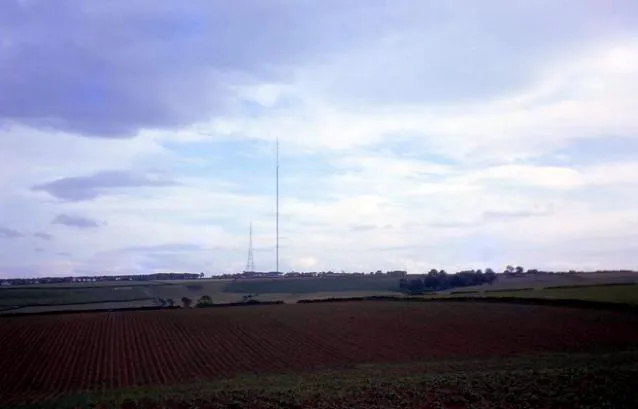
Photo: Les Shaw , CC BY-SA 2.0, via Wikimedia Commons
At two in the morning, British television used to become a room made of numbers. There was no presenter, no title music worth remembering, no face. There was a page: 100 for news, 300 for sport, 400 for weather, 888 for subtitles. The service was Ceefax, and its peculiar power lay in the fact that it was never quite a programme. It was a schedule of information, rotating in silence, waiting to be summoned by a remote control.
A Service Without a Face
Ceefax began in 1974, the BBC’s teletext service, and it was joined in time by commercial rivals such as Oracle. The data travelled in the unseen margins of the television signal, decoded by the set into blocky text and bright colours. It arrived without ceremony. It had no theme tune, no announcer, no closing credits. It was, in the most literal sense, a machine-made presence.
Unlike a ghost, it did not need a story. It needed only a page number. That is what makes teletext so useful to the eerie imagination: it was an information service that behaved like a haunting. It was always there, and it was never quite for you.
The Gap Made Visible
The test card performed a similar office. Test card F, with its girl and clown and calibrated grid, was designed to be looked at by engineers. In practice it was looked at by children, by insomniacs, by anyone who had left the set on after the programmes had stopped. The card was a threshold object: part technical diagram, part domestic icon. It made the gap in the schedule visible.
Then came Pages from Ceefax, the filler that turned the gap into a carousel. Weather maps, headlines, football scores, a page of trivia, a page of nothing much. The schedule had a hole, and the hole was filled with a rotating page. This is the first source of its odd authority. A test card says that transmission has paused. A teletext page says that information continues. The set is not dead; it is simply waiting for the right number.
The Ghost in the Page Number
The eerie part was the wait. Teletext pages did not load instantly. You keyed in 302 and waited while the carousel turned through its cycle. The page arrived, held for a moment, moved on. If you missed it, you waited again. The remote control became a small instrument of hope and delay.
This is the grammar of haunting: repetition, postponement, the sense that something is being addressed to no one in particular. A ghost is often described as a presence that does not know it is dead. Teletext was a presence that did not know it was being watched. It repeated the same weather map, the same headline, the same score, with the patience of a machine that had all night.
And yet it had authority. The page numbers were fixed. The categories were orderly. The service kept hours even when no one was keeping them with it. In a country that trusts schedules, the teletext carousel was a quiet civil servant of the airwaves: unglamorous, punctual, and faintly unsettling because it never stopped.
After the Switch-Off
Analogue television in the United Kingdom ended in 2012, and with it Ceefax and its commercial rivals passed into the archive. The dead hours did not vanish, however. They were refilled with rolling news, shopping channels, autoplay trailers and the endless menu of streaming services. In 2026 the television can still be left on in an empty room, but it is less likely to be silent.
That is why the teletext gap retains its power. It was not merely old technology. It was a particular arrangement of absence: a scheduled emptiness, filled by a machine that had been told exactly what to do. The ghost was not in the text. The ghost was in the timetable.
A Small Ritual of Waiting
Viewers learned the page numbers as one learns a prayer or a bus route. Page 888 for subtitles. Page 100 for the headlines. Page 400 for the weather. The numbers became a small folk literacy of the cathode-ray tube, passed around households without instruction. The service taught patience, and it taught the possibility of missing what you had asked for.
There is a lesson here for the British ghost story. We are often told that horror needs a figure, a face at the window, a shape on the stairs. But teletext suggests otherwise. A rotating page of football results can be more disturbing than a spectre, because it obeys a rule we cannot see. It is not malevolent. It is simply scheduled.
The screen was not haunted. The timetable was.