The Uncorrected Hour: Britain’s Village Clocks and the Right to Be Wrong
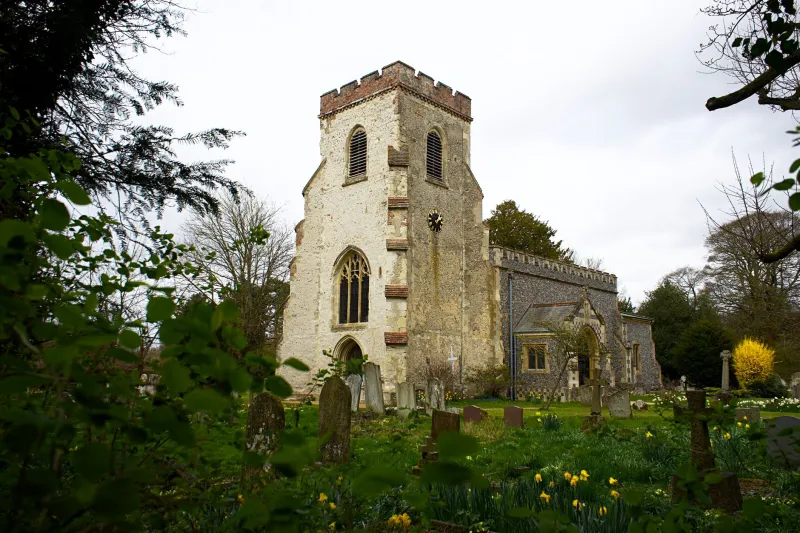
A clock on a village hall or church tower is seldom regarded as a private instrument. It is a public face, a piece of local architecture with a duty attached. So when its hands come to rest, or when they continue to move but keep the wrong hour, the parish is left with a question that is not merely mechanical. Who is entitled to correct it? And what does it mean when nobody does?
The distinction matters. A stopped clock announces failure plainly enough. A clock that is knowingly wrong, however, suggests a decision. It may be a decision made by a volunteer who winds the mechanism each week, by a parochial church council unwilling to authorise an expensive repair, or by a community that has grown fond of its own small deviation from Greenwich. In each case, the clock ceases to be an instrument and becomes a local custom.
The Authority of a Public Face
Church towers and memorial clocks carry a particular kind of authority. They were often erected as commemorations, paid for by subscription, and inscribed with the names of the dead or the gratitude of the living. A clock of this sort is not simply a means of telling the hour. It is a monument that happens to tell the hour, and its face is expected to perform both duties at once.
When such a clock loses time, the loss can feel strangely personal. The tower continues to stand; the bells may still be rung; the plaque remains legible. Only the hands have withdrawn from their post. In some parishes the clock is stopped for months while a faculty is sought, a specialist horologist is consulted, or a fundraising appeal limps through the winter. In others, the mechanism is wound faithfully but left uncorrected, as though accuracy were a lesser virtue than continuity.
This is where the eerie begins to gather. A public clock that is wrong does not merely misinform. It quietly disputes the shared assumption that time is a single, agreed thing. The parish is still connected to the national grid of minutes and hours, but its most visible timepiece has opted out.
The Keeper’s Discretion
The people who wind Britain’s village clocks are often the least visible figures in local life. They climb towers, oil bearings, reset weights and attend to the long, patient machinery of a public duty. Some are retired engineers; others are churchwardens or volunteers on a rota pinned inside a vestry. Their knowledge is practical and local. They know that the clock gains in cold weather, that the strike is temperamental, and that the summer change is best made on a weekday morning when nobody is watching.
In such hands, correction becomes a matter of discretion. A clock may be set fast so that it is never late for the services it once governed. It may be left slow because the mechanism is due for overhaul and the cost cannot be met. It may be stopped altogether during building work and then, by unspoken agreement, left as it is. As of 2026, many parishes are still negotiating the same small questions their predecessors faced: whether to modernise, whether to electrify, whether to preserve the old movement as an object of heritage while a discreet modern unit keeps the hands in motion.
What is rarely recorded is the moment when a wrong clock becomes the accepted clock. A village begins to arrange itself around the anomaly. The memorial clock in the hall is ten minutes slow, and everyone knows it. The tower clock is five minutes fast, and the bellringers allow for it. Visitors are corrected; residents no longer notice. The error is not concealed. It is domesticated.
A Small Civic Anomaly
There is a particular British tenderness towards institutions that are permitted to be slightly wrong. A bus that is always late, a parish newsletter that appears a week after the events it describes, a clock that has never quite settled to the hour: these are not simply failures. They are familiar irregularities, and familiarity can soften judgement.
Yet the uncorrected clock also carries a faint threat. It reminds the parish that time is not a natural phenomenon but an agreement. Someone must wind the spring, set the hands, and decide which authority prevails. When that decision is withheld, the clock face becomes a small stage for civic unease. The hands point to an hour that no one is prepared to defend.
This is why the deliberately wrong clock can feel more haunting than the broken one. A broken clock is honest about its condition. A wrong clock maintains the appearance of order while quietly refusing the terms of that order. It is not haunted by a ghost; it is haunted by a committee decision that was never taken, or a repair that was never funded, or a keeper who has decided, for reasons of their own, that the old hour is good enough.
The Minutes Nobody Winds
In the folklore of ordinary places, such anomalies acquire a kind of narrative gravity. The stopped clock becomes a landmark: meet by the one that is always slow. The tower clock that strikes the wrong hour becomes a local joke, then a local truth. Children learn the deviation before they learn its cause. The anomaly is absorbed into the parish’s sense of itself, and to correct it would be, in a small way, to alter the place.
That is not to say the clocks are sacred. Many are repaired, electrified, or brought back to punctuality with relief. But the ones that remain wrong attest to a quieter understanding: that a community may keep time without surrendering every minute to the same authority. A village clock that keeps its own time is not necessarily neglected. It may be tolerated, defended, or simply left alone.
And in that tolerance lies the uncanny. The clock does not need to stop dead to trouble us. It need only continue, with perfect public confidence, to be wrong.