The Order That Outlives the House: Britain’s Milk Rounds and the Empty Doorstep
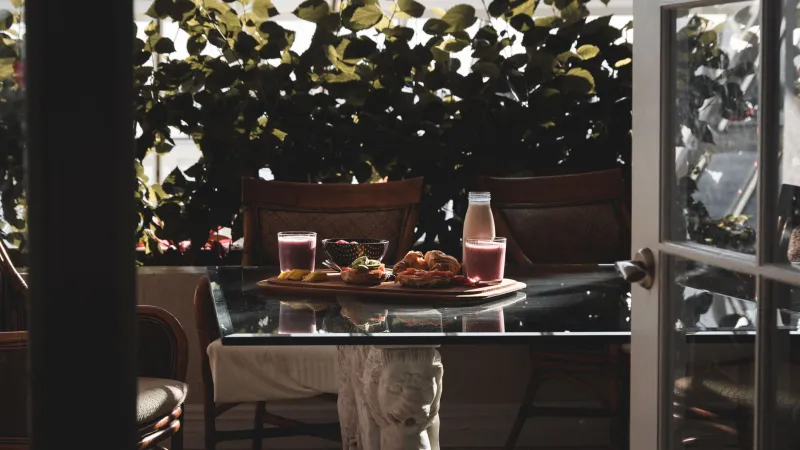
At shortly after four in the morning, a milk float is heard before it is seen. The sound is not dramatic: a low electrical hum, the click of a handbrake, the chime of glass against glass. In the half-light of a suburban road, the vehicle moves at walking pace, its driver consulting a route that exists less on paper than in the body. The bottles are left on doorsteps, in porches, inside crates that have stood in the same place for years. By the time the household wakes, the transaction is already over. Nothing has been said. The milk is simply there.
As of 2026, the British milk round survives in a reduced but persistent form. It has adapted to online accounts, card payments and doorstep apps, yet it retains an older grammar: repetition, quietness, and the assumption that a house is a place where someone will eventually want a pint of milk. That assumption is the source of its peculiar power. A milk round is not merely a delivery service. It is a standing order in the fullest sense — an arrangement that can continue after the circumstances that justified it have vanished.
The Hour Before the Household
The milk float belongs to a narrow band of time that is neither night nor morning. Streetlights are still on, but the sky has begun to pale. Few people are awake. The driver’s work is largely invisible, and its invisibility is part of the ritual. Crates are stacked, bottles counted, notes taken from empty bottles and replaced with full ones. In older rounds, the customer might leave a handwritten card: “No milk today,” “Two extra please,” “Back Friday.” These notes are small documents of domestic intention, left out in the dark for a person who will never knock.
The float itself is an odd piece of infrastructure. It is slow, exposed and utilitarian, yet it moves through residential streets with the familiarity of a postman or a district nurse. It does not announce itself. It does not need to. The route is fixed, and the route is the point. Repetition has made it ceremonial without anyone intending a ceremony.
A Route Made of Repetition
A milk round is a form of local knowledge. Drivers learn which gates stick, which dogs are harmless, which porches shelter bottles from the rain, which households prefer silver top and which will accept gold. They learn the houses that leave a note and the houses that never do. In this sense, the round is a living map of a street, updated daily by small observations.
That map can become uncanny when the street changes but the route does not. A household moves away, a tenant dies, a family shrinks, a door goes unanswered. The standing order, however, may remain in place for a week, a month, or longer. Sometimes this is an oversight. Sometimes it is a matter of billing. Sometimes a neighbour or relative has not yet cancelled the account. But in the folklore of the round, the persistent delivery takes on a different quality. The bottle at the door becomes a sign that someone, somewhere, still believes the house is occupied.
The Standing Order
The phrase itself is instructive. A standing order is an instruction that continues without renewed consent. It is bureaucratic, ordinary and faintly unsettling. Most of us have standing orders for rent, insurance or subscriptions, and we rarely think of them as ghostly. Yet the milk round gives the idea a physical form. The order is not merely a line in a ledger; it is a pint of milk on a step, cold and real, waiting to be taken in.
In accounts of doorstep delivery, one recurring motif is the order that is kept alive by habit rather than need. A customer begins with two pints, reduces to one, then to a single bottle every other day. The reduction is a quiet biography of a household. When the order stops changing, it may be because nothing else is changing either. The milkman, who sees the doorstep but not the life behind it, becomes an accidental witness to domestic time.
Three Doorsteps
The following vignettes are composite sketches, drawn from the recurring motifs of doorstep lore rather than from a single reported case.
The bungalow with the blue door. The order is one pint, three times a week, paid by direct debit. The occupant is no longer there. A neighbour believes the account belongs to a relative, or perhaps to no one at all. The bottles continue to appear. After several days, the neighbour begins bringing them in, not because they are wanted, but because the sight of them standing in the rain feels like an accusation.
The farm track. The gate is rusty, the lane is unsurfaced, and the house at the end has been empty since the spring. The milk float still turns into the track because the route has always turned into the track. The driver leaves nothing, but the vehicle pauses at the gate before reversing out. It is a pause of pure procedure, a remembered action with no object. In the half-light, it looks like waiting.
The flat above the shop. The name on the account belongs to a former tenant. The new tenant does not drink milk, but keeps the order for a fortnight because it seems unkind to stop it. The bottles accumulate in the shared hallway. Eventually, the new tenant writes a note and leaves it out. The next morning, the note is gone. So are the bottles. The order has been cancelled, but the doorstep has been taught a new habit.
Why the Float Feels Uncanny
The milk float is not a ghostly object in the conventional sense. It is brightly lit, practical and answerable to a dairy. Its uncanniness lies elsewhere: in its timing, its silence and its indifference to the emotional weather of the street. It arrives when no one is watching and performs an action that presumes the household will wake. If the household does not wake, the presumption remains. The bottle stands at the door like a question that has not yet been answered.
This is why the milk round suits eerie fiction so well. It requires no supernatural apparatus. The horror, such as it is, is administrative. A standing order is a promise made in advance and kept without enthusiasm. The milk float is its messenger: slow, half-lit, and entirely without malice. It does not know what has happened behind the door. It only knows the route.
The Ethics of the Left Pint
There is also a practical ethics to the left pint. Milk is perishable, and waste is not neutral. Drivers and dairies have procedures for missed deliveries, holidays and cancellations. Many rounds now rely on apps and online accounts, which make cancellation easier but also more abstract. The handwritten note in the bottle has not disappeared entirely, but it belongs to an older relationship between customer and deliverer.
That relationship is worth noticing. The milk round is a small system of trust: trust that the milk will be left, trust that payment will be made, trust that the street will still be there in the morning. When the trust persists beyond its original object, the result is not necessarily frightening. It is simply strange. A bottle at an empty door is a reminder that ordinary systems can keep running after the reasons for them have gone quiet.
Last Light
By seven, the float has finished its route. The sky is fully light, the streets are awake, and the bottles have been taken in or ignored. The driver returns to the depot. The standing order remains in the system, waiting for tomorrow. In a country that likes its ghosts to be polite, the milk round offers a particularly restrained form of the uncanny: no chains, no moaning, no cold spots. Just a pint left out, and a house that has not yet decided whether to cancel.