A Stranger on the Facade: Blue Plaques and the Civic Afterlife of Ordinary Houses
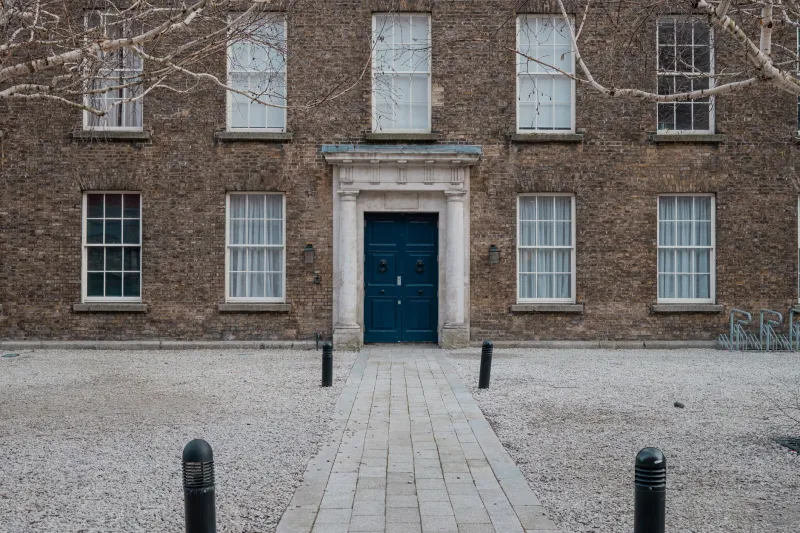
There is a particular kind of silence that falls when a visitor stops outside a terraced house and reads a blue plaque. The current occupants may be watching from behind the net curtains. The bins are out. A bicycle is chained to the railing. Yet the plaque has already addressed the building to someone else. It does not say that a person once passed through. It says, in effect, that the house is still keeping an appointment with them.
The Roundel as a Second Front Door
London’s blue plaques are the best-known example of a civic habit that began in 1866, when the Society of Arts proposed marking houses associated with notable figures. The scheme passed through several custodians before becoming the English Heritage London Blue Plaques programme. Its grammar is simple and severe: a name, a profession, dates, and the words lived here. The plaque does not explain the life. It merely attaches it to a façade.
That attachment is more unsettling than it first appears. A house has its own memory, built from repairs, redecorations, arguments and ordinary routines. The plaque introduces an official memory that outranks it. The resident may know nothing of the commemorated person beyond the inscription, but the inscription knows exactly where it is. It behaves like a second front door, one that opens not into a hallway but into the civic past.
When the Building Changes Its Mind
Most plaques are not placed on museums. They are placed on buildings that continue to be used, and often used for something entirely different. A house where a poet lodged may now contain a dental surgery. A terrace associated with a campaigner may have become serviced offices. The plaque stays at eye level while the life inside the building is rewritten.
This is where the uncanny begins. The building has changed its mind about what it is, but the plaque has not. It continues to insist on a former identity with the mild, immovable confidence of a legal notice. In some streets the effect is doubled. On Brook Street in London, plaques to George Frideric Handel and Jimi Hendrix bring two centuries into uncomfortable neighbourliness. The address becomes a palimpsest, and the present occupant is merely the latest layer.
Beyond London, the habit is carried by civic societies, local councils and heritage groups from Bristol to Leeds. Their tablets are often less uniform than the London roundel, but the principle is the same. A small rectangle of enamel or stone is given the power to define a place. It is a folk custom dressed as bureaucracy: the village remembers by fixing a name to a wall.
The Address That Forgets Its Dead
The strangest plaques are those that survive a demolished building. Sometimes the tablet is reattached to a replacement structure. Sometimes it stands on a boundary wall, a gatepost or a patch of paving, marking a site where the house itself has gone. The address continues as a coordinate. The dead are remembered, but the rooms are not.
A plaque on a demolished site has no façade to lean on. It becomes a fragment of official memory floating above ordinary ground. Passers-by may read it without realising that the building it describes exists only in photographs and rate books. The inscription says lived here, but there is no here left to live in. The grammar is stranded. It is not a ghost story, yet it produces the conditions in which ghost stories become tempting.
The Authority of the Small Disc
What gives a plaque its eerie authority is not the person it commemorates. It is the act of official selection. Someone decided that this life, this address and this wall belong together. The decision is then left to weather. The plaque does not argue. It does not explain. It simply remains, and in remaining it changes the building’s status.
For the current resident, the plaque can be a mild burden. Visitors pause. Photographs are taken. The house is discussed in the past tense. The resident becomes a custodian of a stranger’s reputation, whether they wished for the role or not. This is a very British form of haunting: no chain-rattling, no cold spots, only the quiet knowledge that one’s home is also an exhibit.
A Guide for the Living
To read a blue plaque well is to read it as a double address. The first address belongs to the present: the number, the street, the door that opens with a key. The second belongs to the civic imagination, which has decided that the house shall forever be introduced by someone else’s name. The plaque outlives the house not because it is magical, but because official memory is patient.
So when you pass one, do not merely note the famous name. Look at the building that has been asked to carry it. Notice the changed windows, the new sign above the door, the ordinary life continuing behind the glass. The plaque is not the ghost. It is the instruction that makes a ghost think it has been invited.