Dial Tone for the Disconnected: Britain’s Red Kiosks and the Call That Will Not End
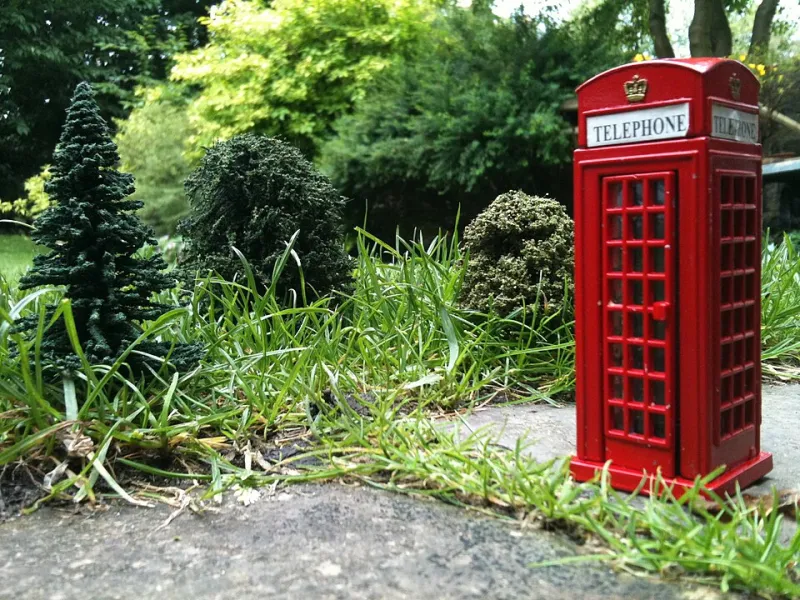
Photo: Temple of Mara, CC BY-SA 3.0, via Wikimedia Commons
A Design That Refuses to Vanish
The red telephone kiosk is one of the few pieces of British street furniture that people photograph without irony. Designed by Giles Gilbert Scott, its pre-war and post-war incarnations became a national motif: crimson, glazed, crowned, and slightly too small for the modern body. As public telephones declined, the kiosk was expected to disappear. Instead it has undergone a strange second life. In villages and suburbs, on greens and beside parish noticeboards, the box remains — sometimes as a library, sometimes as a defibrillator cabinet, sometimes as a shell with nothing inside but a notice thanking the parish council. As of 2026, the kiosk is less a telephone than a piece of adaptable civic furniture.
The Kiosk as Threshold
The peculiar power of the kiosk lies in its position between public and private. A telephone box is a public facility, but the act of using one was intimate. You stood in a glass box, in view of the street, and spoke into a receiver that had been held by strangers. The door closed; the world continued outside. The kiosk offered a temporary privacy that was never absolute. It was a threshold in the literal sense: a place you entered to be connected to somewhere else.
That threshold quality survives even when the phone is gone. A kiosk with a defibrillator inside is still a place of emergency. A kiosk with books inside is still a place of exchange. A kiosk with nothing inside is still a place where the imagination can supply a caller.
The Library, the Cabinet, the Empty Box
Adaptive reuse has given the red kiosk a folkloric afterlife. Village libraries are perhaps the most gentle version: a few shelves, a handwritten sign, a paperback left by a neighbour. Defibrillator cabinets are the most urgent: the box becomes a small red chapel of survival, its glass door now protecting a machine rather than a receiver. Other kiosks have become coffee stands, planters, noticeboards, miniature museums, or simply painted ornaments at the edge of a green.
Each adaptation changes the meaning of the box without entirely removing its earlier one. The kiosk was designed for a voice. Even when it holds books or a defibrillator, it retains the shape of a place where a voice might once have been. This is why it remains a useful setting for fiction. The reader knows what the box was for, and the writer can rely on that knowledge.
Numbers That No Longer Connect
Informal local accounts often attach uncanny stories to decommissioned kiosks. The phone rings though no line is connected. A caller speaks from a number that has been out of service for years. A voicemail message arrives from a box that has been converted into a book exchange. Such stories are rarely presented as fact; they circulate as anecdotes, the kind told at the end of a village meeting or in the comments beneath a photograph. Their power lies in their ordinariness. The kiosk is not a Gothic ruin. It is a red box beside a road.
The folklore of the disconnected call is, at heart, a folklore of obsolete infrastructure. The telephone network was once a vast nervous system; its retreat has left behind objects that remember their function. A ringing kiosk is unsettling because it suggests that the system has not fully agreed to be over. The box is empty, but the call is still coming through.
The Last Call: A Fiction Prompt
Write a story about a parish councillor who is responsible for a decommissioned kiosk. The box has been converted into a library; the shelves are full of donated paperbacks. One evening, the councillor sees the light on inside. The telephone receiver — which was removed years ago — is off the hook. The prompt is to decide who is calling, but not to let the answer be simple. The kiosk is a threshold; the story should keep the door slightly open.
Why the Kiosk Still Rings
The red kiosk endures because it is both obsolete and adaptable. It no longer does the job it was designed for, but it continues to mark a place where connection might occur. In 2026, that makes it a strange kind of heritage: not a monument to the telephone, but a monument to the idea of being reachable. The box is empty. The phone is ringing. And the village, pretending not to listen, walks past it on the way to the post office.