The Plot That Watches Back: Sheds, Scarecrows and the Municipal Uncanny
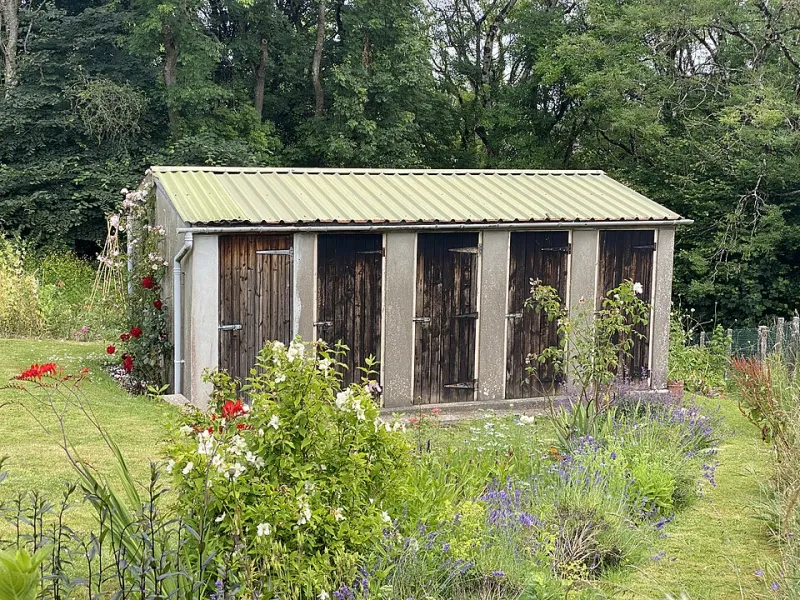
Photo: Alan Hughes , CC BY-SA 2.0, via Wikimedia Commons
Britain’s allotments are usually discussed in the language of wholesome leisure: seed catalogues, compost rotas, a flask of tea in a shed. That is precisely why they work so well as folk horror. The allotment is a small, municipal, rule-bound place, and the uncanny thrives when it has a fence around it.
At the end of a lane, behind a corrugated fence and a padlocked gate, the allotment presents itself as an ordered pocket of soil. It is not a moor, a ruined abbey or a foggy churchyard. It is a rectangle of earth with a water butt and a noticeboard. Yet the ordinary details — the numbered plots, the inspection letters, the scarecrow in a anorak — carry a particular kind of dread. This is the municipal uncanny: horror that arrives not from the wild, but from the committee.
The Fence Is the First Character
Every allotment site begins with a boundary. Sometimes it is a hedge, sometimes a wobbly wire fence, sometimes a wall that belongs to nobody in particular. The boundary is practical — it keeps out dogs, rabbits and the curious — but it also creates a jurisdiction. Inside the fence, different rules apply. Inside the fence, the plot-holder is sovereign over a few rods of earth, and the committee is sovereign over the plot-holder.
Boundary disputes on allotments have a way of becoming folklore. A strip of ground between two plots, a hedge trimmed too far, a shed door that opens over a neighbour’s path: these are small matters that can feel, in the retelling, like curses. The language of trespass and permission begins to sound older than it is. The allotment is a place where the phrase ‘that’s not your side’ can carry the weight of a border ballad.
Sheds That Face the Wrong Way
The shed is the allotment’s domestic centre. It holds the kettle, the seed tin, the chair with the broken leg and the calendar from the hardware shop. Most sheds face the path, the light or the plot. Some face the fence. It is these sheds — the ones that turn their windows away from the world — that attract suspicion.
A shed facing the wrong way is not merely inconvenient. It is a small architecture of watchfulness. It suggests someone inside who does not wish to be seen, or someone outside who is being observed. The allotment shed is a house in miniature, and like all houses in miniature it can be made to hold a story. A padlock on a shed door is ordinary. A padlock on a shed door that is already open is a different proposition.
The Scarecrow Problem
Scarecrows are supposed to be comic. In practice, they are one of the few objects on a British allotment that are deliberately made to resemble a person and then left outdoors for months. Old clothes, a hat, a stuffed sack, a face drawn in marker pen: the effect depends on the weather. A scarecrow that has lost an arm is pathetic. A scarecrow that has kept its hat is unsettling.
The problem is personality. A scarecrow with too much personality — a named scarecrow, a scarecrow dressed in a particular coat, a scarecrow that has been adjusted since the last visit — begins to occupy the plot as a character rather than a device. It does not need to move. It only needs to be remembered. The allotment is full of such quiet agents: the fork left upright in the soil, the row of canes like a small fence, the marrow that has grown too large and been left to sit. None of these things is supernatural. All of them can be made to feel as if they are waiting.
Rules, Inspections and the Committee
What distinguishes the allotment from the wild wood is administration. There are tenancy agreements, cultivation rules, restrictions on keeping livestock, notices about bonfires and letters about neglected plots. The committee is not a secret society, but it is a body that watches. It walks the paths. It notes the uncut grass. It sends the letter.
This is where the folk horror of the allotment becomes genuinely modern. The dread is not that the land is ancient and angry. The dread is that the land is small, allocated and inspected. The plot-holder is never quite alone. The neighbour is behind the hedge, the committee is at the gate, and the noticeboard is a public record of private failure. A weed is not just a weed; it is evidence. A fallow bed is not just fallow; it is a paragraph in a file.
The Smallness of the Horror
British horror has often trusted small places more than grand ones. A graveyard can be atmospheric, but an allotment can be personal. The horror is not that something ancient has woken beneath the soil. The horror is that the soil is divided into plots, and one of them is yours, and someone has been standing at the end of it for a while now.
The allotment at the end of the lane does not need a ghost. It has a fence, a shed, a scarecrow and a set of rules. That is enough. The municipal uncanny works because it is close to home, and because the most unsettling thing about a small garden is not what might be buried in it, but who might be watching it grow.